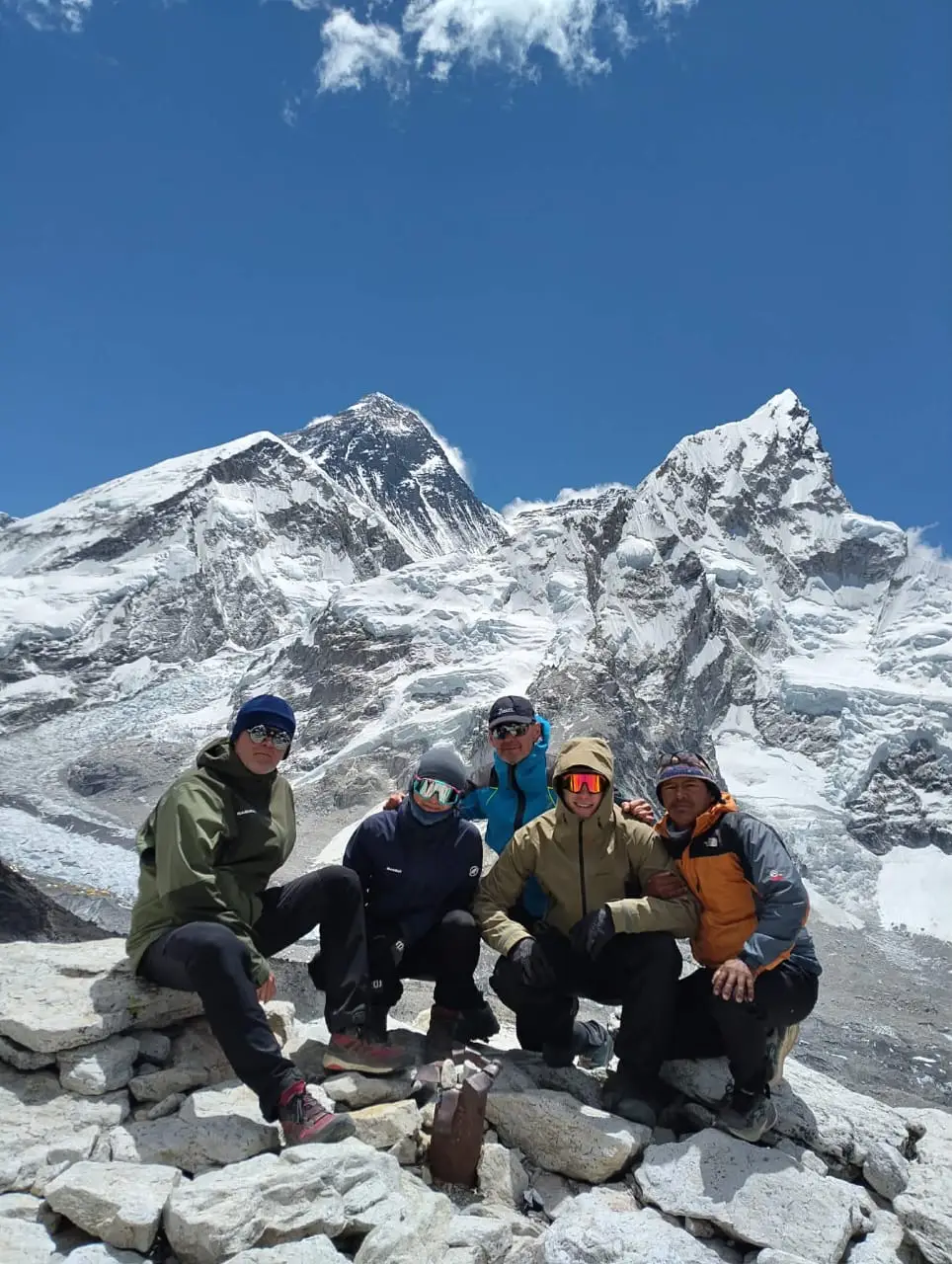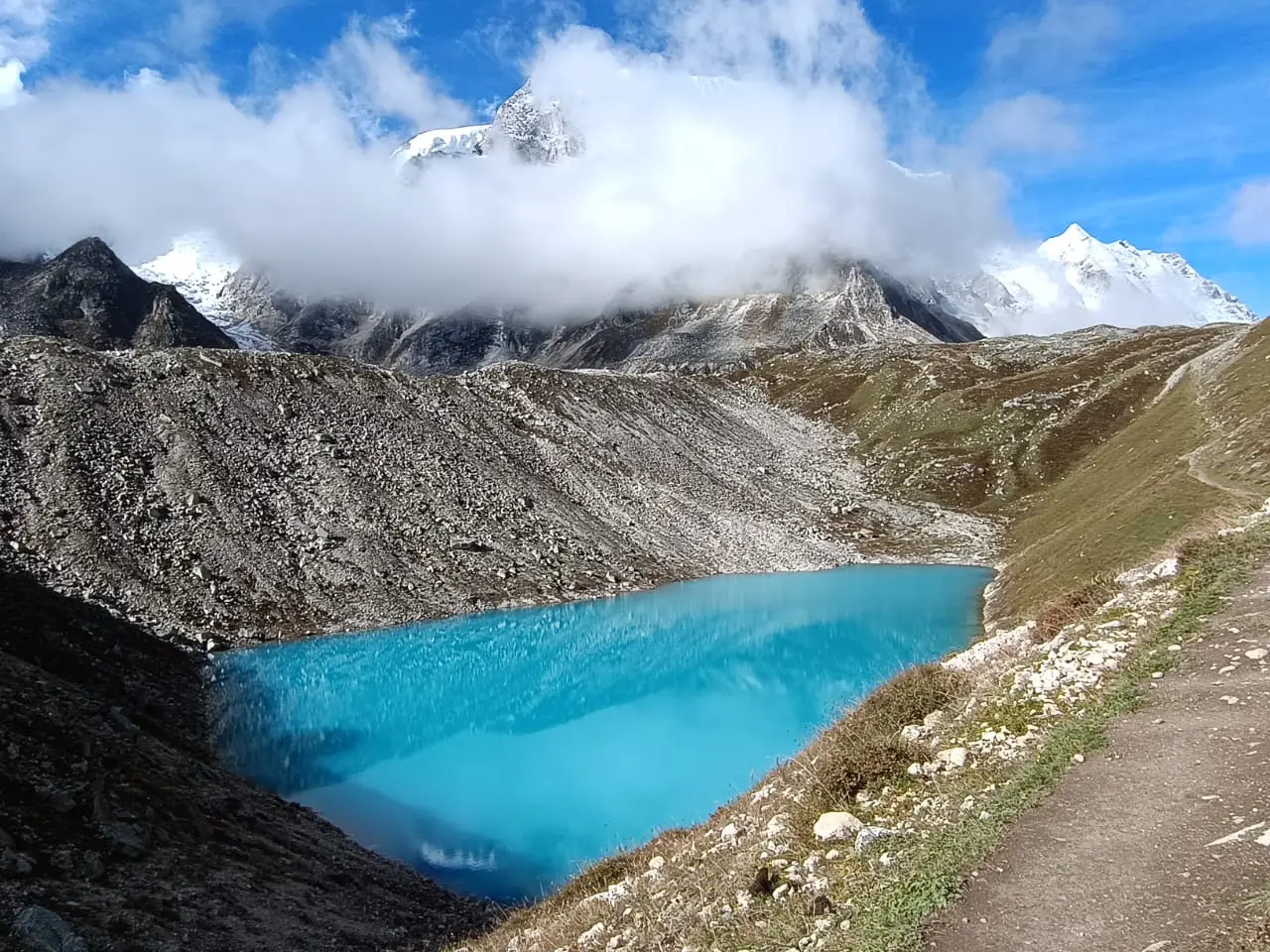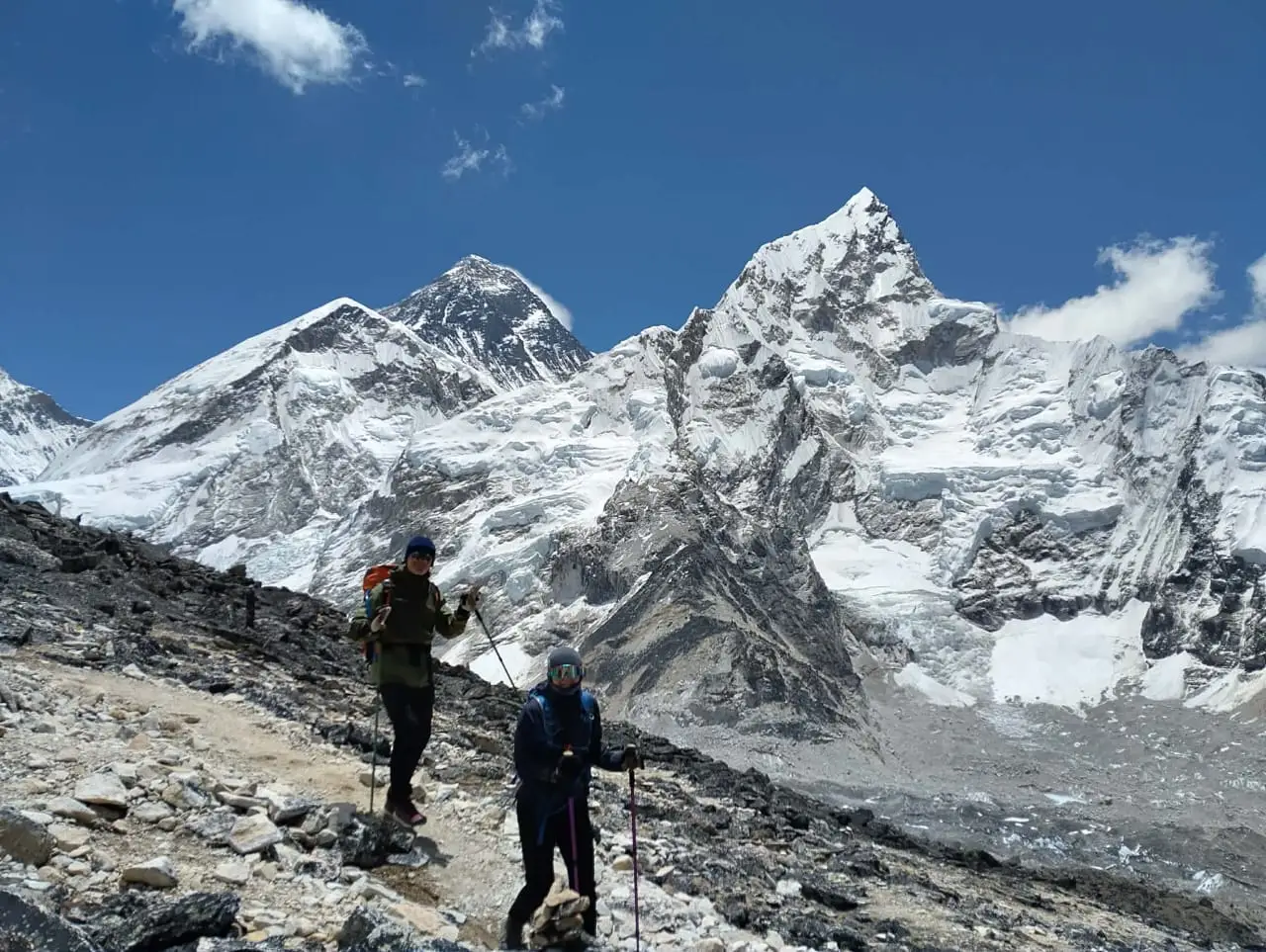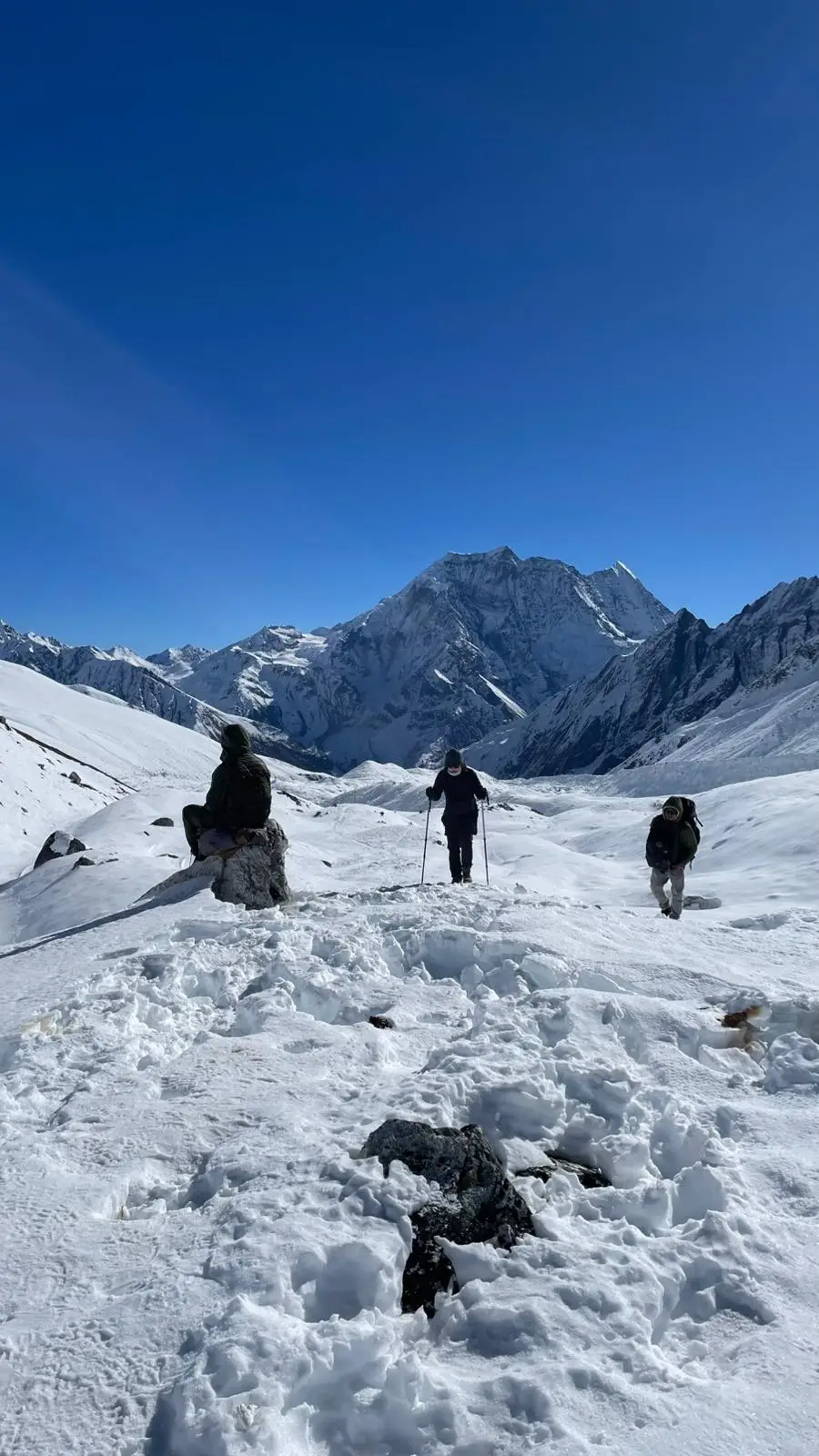
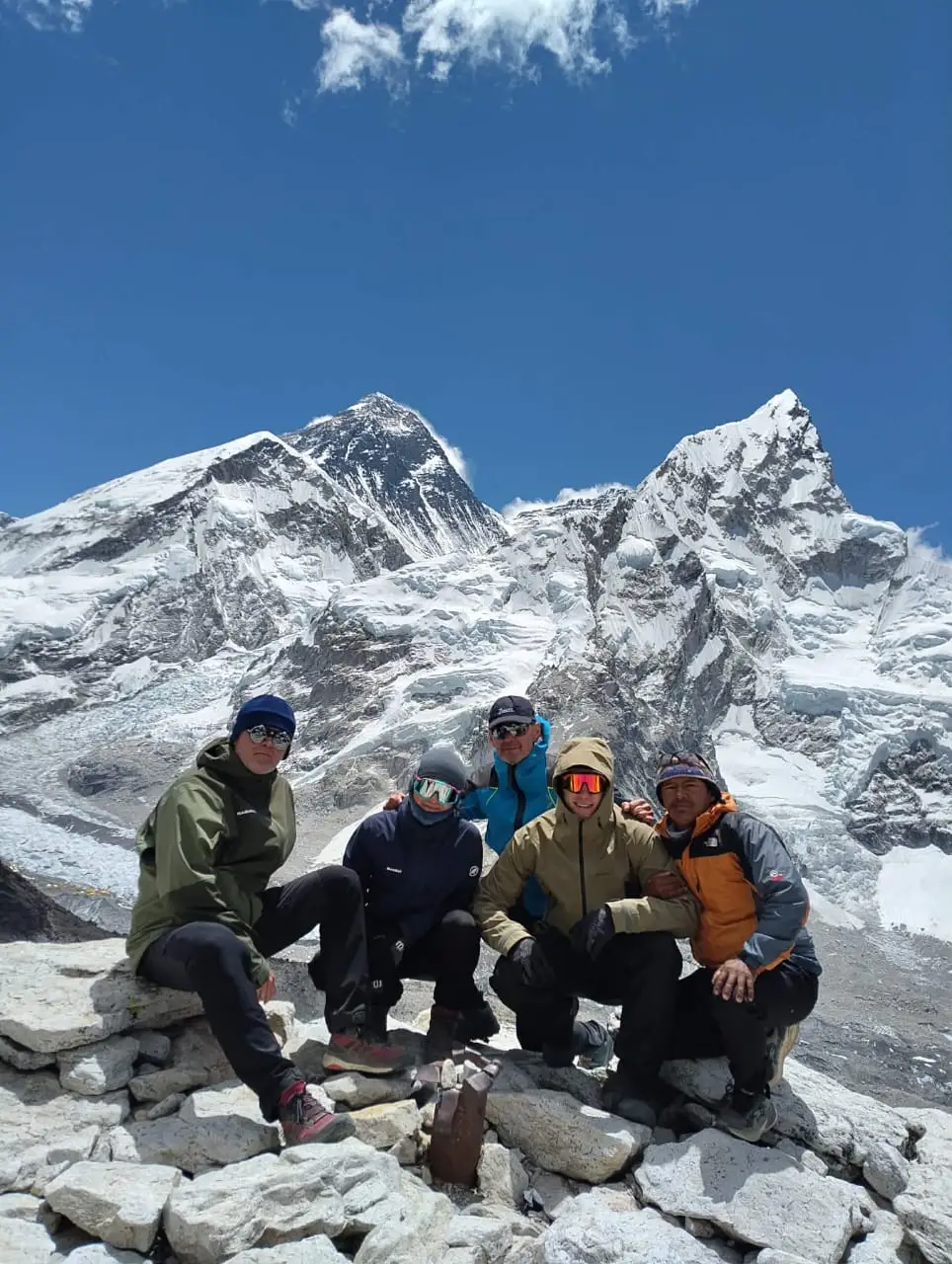
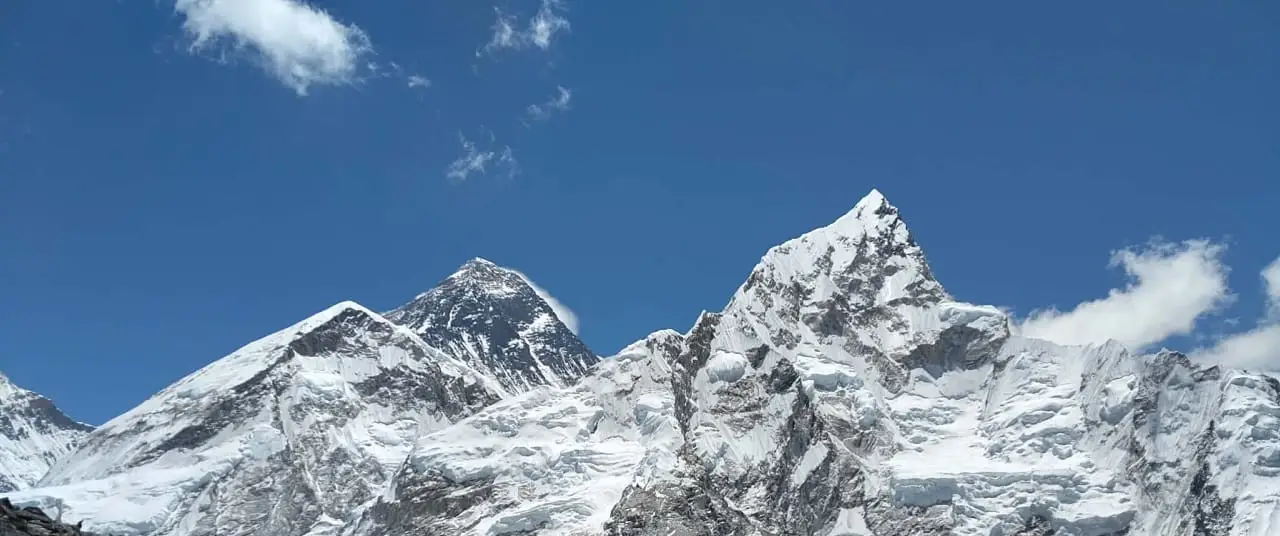
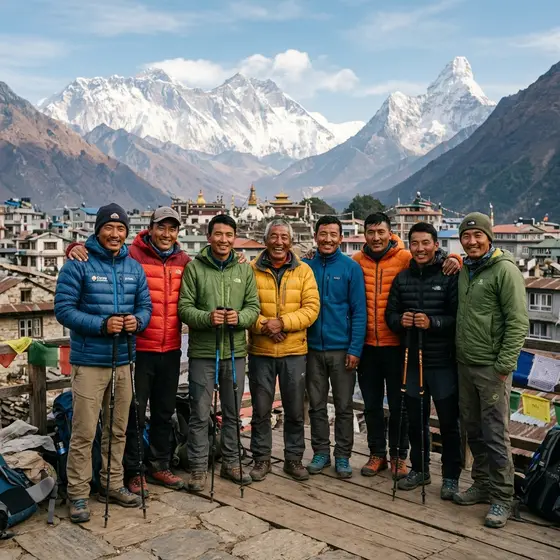
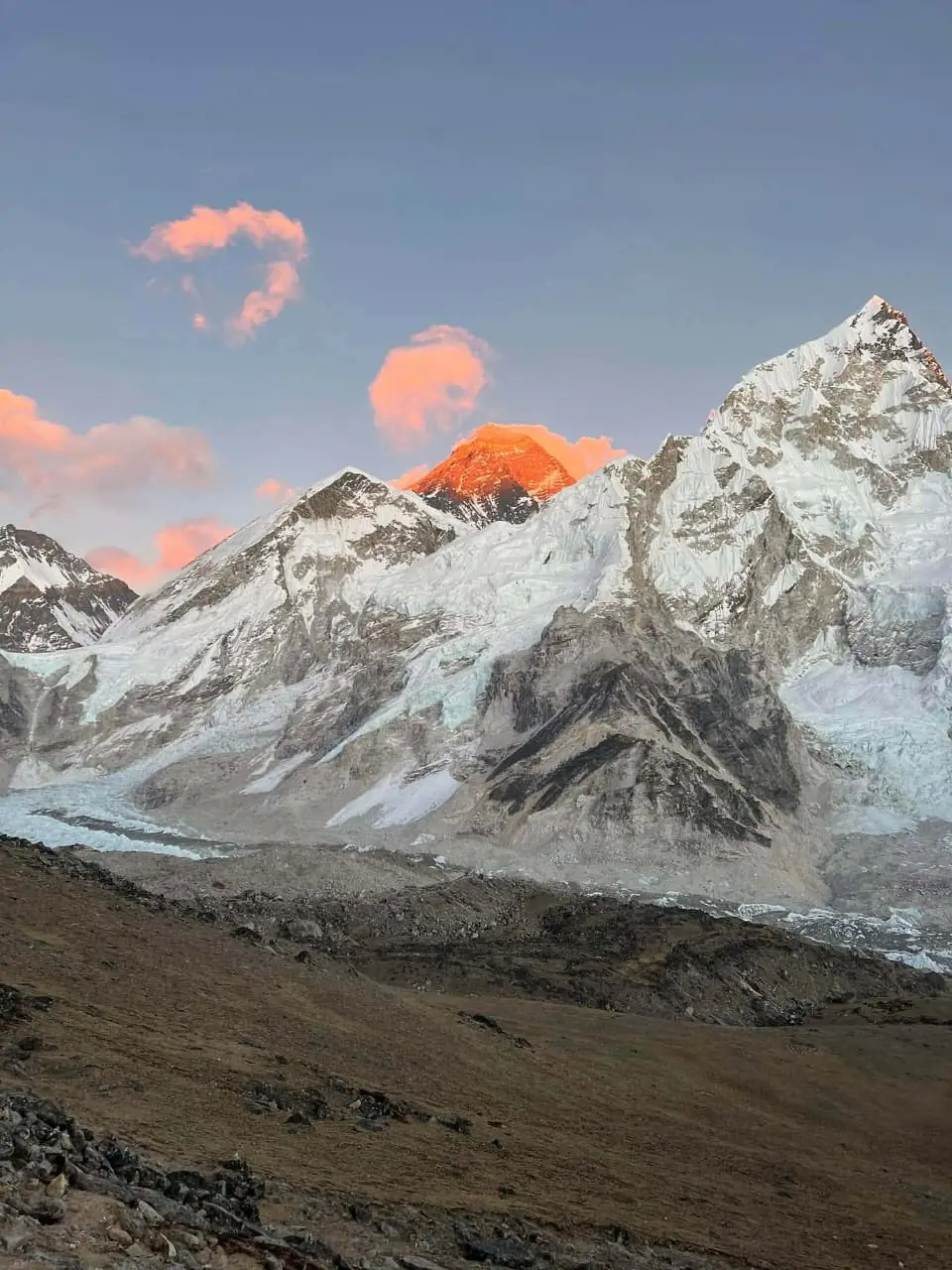
The Khumbu is the most walked corner of the Himalaya and it earns the traffic: one flight out of Kathmandu and you are walking under Everest, Lhotse and Cho Oyu inside a week, sleeping in Sherpa villages that have been hosting climbers since 1953.
What the walking is like
Teahouse trekking in its purest form. The trail is a stone staircase for much of its length — up out of the Dudh Koshi gorge to Namche, then a long, gradual gain past Tengboche and Dingboche to the moraine. Five to seven hours of walking a day, a lodge with a dining-room stove at the end of every one of them, and nothing technical underfoot.
Altitude is the whole difficulty here, not the terrain. Above Namche the air thins fast, and the itinerary stops being about distance and starts being about acclimatisation days. We build in two of them as standard, and we would rather turn a group around at Lobuche than push a headache to 5,000 m.
Season and weather
Autumn (late September to November) is the clearest air of the year and the busiest the lodges ever get — book the peak weeks early. Spring (March to May) is warmer, greener low down, and the one window where Base Camp is a working climbers' city rather than an empty moraine.
Winter is cold but genuinely beautiful and almost empty, and the trail stays open to Base Camp in most years. The monsoon (June to August) means cloud, leeches below Namche and Lukla flights that cancel for days at a time — we will talk you out of it.
Permits and access
Everest starts with a flight — Kathmandu to Lukla in the quiet months, Ramechhap to Lukla in the peak weeks, which means a pre-dawn drive the night before. Flights go when the Lukla weather says so and not before, so every Everest itinerary we sell carries a buffer day at the Kathmandu end.
- Sagarmatha National Park entry permit
- Khumbu Pasang Lhamu Rural Municipality permit (this replaced TIMS in the Khumbu)
- A licensed guide — required for solo foreign trekkers, and standard on every trip we run
Everest Region FAQs
No. Most of our Base Camp trekkers have never been above 3,000 m. What you do need is the willingness to walk five to seven hours a day for two weeks, and to take the acclimatisation days seriously when you feel fine and want to push on.
We rebook you on the next available slot and, if the window is closing, we move you to a helicopter share at cost. That is why we build a buffer day in — a single cancelled morning should never eat your trek.
Honestly, Kala Patthar (5,545 m) is the view — Everest hides behind Nuptse from Base Camp itself. Most people want to stand at both, and the standard itinerary does. We will tell you the same thing before you book.